Showing posts with label Celebrity. Show all posts

Russell Crowe Helped Me Get Wolverine - By Turning It Down


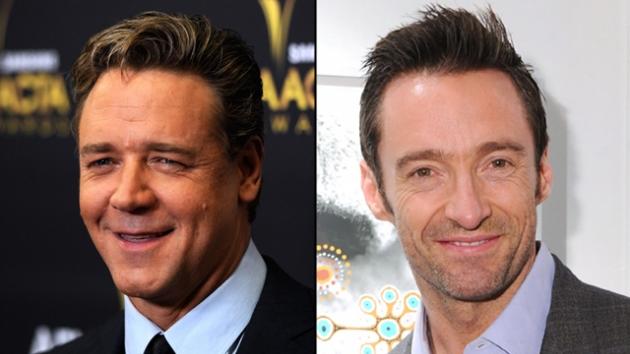
Hugh Jackman: Russell Crowe Helped Me Get Wolverine - By Turning It Down - Hugh Jackman has revealed that his "Les Miserables" co-star, Russell Crowe, was the original choice for the role of "X-Men" character Wolverine.

"Russell has given me advice several times at key moments in my life that helped with my career. I also owe him because two of the biggest roles I've ever had in my life, he turned down - and suggested me for them," the actor told Entertainment Weekly in a new interview with the mag, to promote "Les Miserbales."

Russell Crowe, Hugh Jackman -- Getty Images
Russell Crowe, Hugh Jackman -- Getty Images 

"On 'X-Men,' he was Bryan Singer's first choice for Wolverine," Hugh continued. "And he mentioned me also for [Baz Luhrmann's] 'Australia.'"

The two Australian actors play rivals in "Les Miserables" - Hugh as Jean Valjean and Russell as Javert - but in real life, teaming up for the project brought them closer as friends and helped them create better performances.

"We really pushed each other," he told the mag. "That rivalry at the beginning, it really is a constant throughout. It had to be strong, and it's really one of the spines of the story, that runs from beginning to end."

Anne Hathaway, who plays the prostitute Fantine in the film, said it was a role she's been close to since a young age -- she told EW her mother was in a touring production of the musical.

"My first experience was seeing my mom in the show. I was 7 and she was cast in the first national tour as the factory girl who gets Fantine fired. And she [understudied] for Fantine," the actress told the mag. "So my first time seeing the show was when she was the factory girl, and my second time seeing the show was when she played Fantine." ( accesshollywood.com )

READ MORE - Russell Crowe Helped Me Get Wolverine - By Turning It Down

Lady Gaga ditches wheelchair


Celebrity

Lady Gaga ditches wheelchair - Lady Gaga is no longer wheelchair-bound. The 'Edge of Glory' singer has been rolling around in two custom-made designer wheelchairs since her hip surgery last month, but was spotted walking "with ease" for the first time on Tuesday (09.04.13) on a romantic date with her boyfriend Taylor Kinney.

The 27-year-old star appeared to have made a full recovery as she headed to Chicago restaurant Sunday with 'The Vampire Diaries' hunk.

The couple sat down to a meal, with an insider telling the New York Post newspaper they looked "sweet together".

Gaga decided to make the most of her recuperation period following her operation for a labral tear on her right hip by buying some high end wheels.

She asked luxury brand Mordekai to make her a 24-carat gold plated "chariot", which she affectionately nicknamed Emma.

The stylish wheelchair also features a black leather seat - which is inspired by vintage motorcycle jackets - and a removable leather canopy.

She then upgraded to a Louis Vuitton model, which boasts a seat covered with the French fashion brand's iconic print and was spotted whizzing around Chicago in her new contraption.The singer was forced to cancel the remaining US dates of her 'Born This Way Ball' tour after sustaining the hip injury. (C) BANG Media International

READ MORE - Lady Gaga ditches wheelchair

Justin Bieber begins concert more than two hours late (again)


The Image Gate/Getty Images 

Justin Bieber begins concert more than two hours late (again) - Hey, Justin Bieber: we understand it might not go with your harem pants, or those giant metal wings we’ve seen from your show, or maybe not even with your new swaggy haircut – but it might be time for you to start wearing a wristwatch on the regular. 

Bieber was in Dortmund, Germany on Friday night for the latest leg in his “Believe” European tour, but left fans disappointed when he showed up for his performance about two-and-a-half hours late. The crowd at Dortmund’s Westfalenhallen arena apparently chanted, booed, and sat on the floor of the venue until the 19-year-old pop start finally took the stage – without commenting on his tardiness. Many of the young concertgoers reportedly even had to wait outside in the cold for several hours before making it into the arena. 

Because of the area’s laws, adolescents under 16 years of age cannot be at a concert without parental supervision past 10 p.m. For a Justin Bieber concert, that’s a lot of ticketholders. So, as a result, photographers on the scene snapped long lineups of angry parents trying to get their money back. By 9:45, there were allegedly more than 100 adults in line for refunds. 

 
Parents line up for ticket refunds at the Justin Bieber concert. (Splash Images) 

“justin bieber was too late for his concert yesterday, i saw girls crying because they have to left because girls underage 15 (c),” one attendee posted on Twitter, and followed up with: “i think if justin bieber goes on with this life, coming hours too late and being like this, i think his career will end soon im sorry” 

But other Beliebers on Twitter are sticking steadfastly to their favourite pop star. 

“Justin was like an hour late to my concert, our arena did the wave and chanted 'JUSTIN BIEBER' the whole time. TRUE BELIEBERS were there,” @Believeeexoxo wrote. 

“justin was late so people were leaving? it's justin bieber you sit in the damn chair and wait for him,” wrote @malakfarhad. 

Of course, Bieber has made his fans wait before, when he was two hours late previously at a highly anticipated performance at the o2 arena in London, England earlier in March. 

We can perhaps give Bieber the benefit of the doubt. Maybe he lost track of time as he was trying to free his pet capuchin monkey that was confiscated from him in Munich last week. Right now the monkey, who Bieber named Mally, is being cared for at an animal shelter – where it will remain if Bieber doesn’t present German authorities with the proper paperwork within four weeks. 

We never thought that Bieber would have to face such a hard decision – his fans, or his monkey? ( North Stars )

READ MORE - Justin Bieber begins concert more than two hours late (again)

Pippa Middleton: It's 'Startling' To Be Famous For My 'Bottom'


Pippa Middleton: It's 'Startling' To Be Famous For My 'Bottom' - As the sister to Britain's Duchess of Cambridge, Pippa Middleton was thrust into the limelight during 2011's Royal Wedding frenzy.

The 29-year-old's fashion -- and backside! -- were an instant hit with Royal watchers, something Pippa still isn't quite used to.

Pippa Middleton attends The UK Film Premiere of Shadow Dancer at Cineworld Haymarket, London, on August 13, 2012 -- Getty Images

"It is a bit startling to achieve global recognition before the age of 30 on account of your sister, your brother-in-law and your bottom!" Pippa writes in her new book, "Celebrate," as excerpted by the UK's Daily Mail. "One day I might be able to make sense of this. In the meantime I think it's fair to say that it has its upside and its downside."

The glamorous gal said she's "by nature an optimist," which allows her to focus on the perks of her sudden fame, versus the inevitable downfalls.

"I certainly have opportunities many can only dream of - but in most ways I'm a typical girl in her 20s trying to forge a career and represent herself in what can sometimes seem rather strange circumstances," she wrote.

Pippa, an event planner, hopes to introduce her true self to the public through her new party-planning book, as most of what the world knows of her at this point has been via press reports.

"I can assure you that it feels even stranger to me than it probably does to you to have seen so much written about me when I have done so little to paint a picture of myself," she wrote. "This is my first chance to do that and I've enjoyed every minute of it." ( Access Hollywood )

READ MORE - Pippa Middleton: It's 'Startling' To Be Famous For My 'Bottom'

Princess Cruises to Investigate Why Captain Ignored Distress Call


Princess Cruises to Investigate Why Captain Ignored Distress Call - Princess Cruises is conducting an internal investigation after the captain of one of its ships reportedly ignored a passenger's report of a distress signal and continued on course, rather than coming to the rescue of a stranded Panamanian fishing vessel.

Two of the fishing boat's three crew members later died of dehydration, one day after the encounter with the cruise ship.

Adrian "Santi" Vasquez, 18, set out on a fishing trip Feb. 24, 2012, with two 16-year-old friends, Oropeces Betancourt and Fernando Osario. The trip turned deadly when the trio discovered that the outboard motor on their small fishing vessel, "The Fifty Cent," would not start, leaving them stranded in the middle of the ocean.


http://a.abcnews.com/images/International/ht_fishing_boat_distress_jt_120418_wg.jpg


The three Panamanian fishermen drifted at sea for more than two weeks, hungry, hot, and dehydrated, before they spotted the Star Princess cruise ship and started desperately signaling for a rescue.

"It was a really big, white ship. I was waving a red T-shirt, and Fernando was waving a bright orange life jacket over his head,

Vasquez, the crew's sole survivor, said in an interview with panama-guide.com.

"For a minute it looked like they were going to turn to come for us, but then they just went on their way.”

Meanwhile, Judy Meredith of Bend, Ore., and Jeff Gilligan of Portland, Ore., were bird watching on the deck of the Star Princess with Jim Dowdall of Dublin, Ireland, when they spotted the Fifty Cent far off the ship's starboard side.

Equipped for bird watching, the group was armed with high-power binoculars, or spotting scopes, and cameras fitted with telephoto lenses, all of which gave them a good view of the fishing boat in the distance.

"I saw a young man in the front of the boat waving his shirt up and down. Big motions, up over his head and down to the floor, waving it vigorously. Frantically I would say," Meredith told "Good Morning America."

"That signal told me that they were in trouble. They were trying everything they could to get our attention."

Meredith said they told someone at a desk they wanted to call the bridge and be sure they checked on the boat. She said the man at the desk made a call, then came back out and looked through their spotting scopes at the boat, then went back inside.

"Nothing happened," she told "GMA." "The ship didn't slow down. It didn't seem to change course. And so I went back in and asked what the captain was going to do. And he said he didn't know."

Not pacified by the encounter, Meredith returned to her room where she wrote down the ship's coordinates and sent an email to U.S Coast Guard in hopes that they would take action.

"The boat appeared to be a disabled fishing boat with one person aboard and nets strung up from the masts," Meredith wrote. "The person was actively waving a shirt or fabric object up and down with both hands. Since we were so many miles off shore and had not seen ANYwatercraft all day, we summoned a representative from the ship and asked him to phone the bridge.

"The rep then came back after calling the bridge of the Star Princess and looked through our scopes himself and could see the man waving something. By this time, he appeared farther away and was now waving a red flag," she continued in the email. "We took this to be a sign of distress. The boat could be disabled and the man adrift. The Star Princess did not turn around or appear to make any active attempt to deal with the information, so we were bothered and decided to send information somewhere ourselves although we realize this is NOT U.S. waters."

The Coast Guard did not find the Fifty Cent however, and the boat floated aimlessly for another two weeks, during which both Bentancourt and Osario died of dehydration.

Vasquez, the sole remaining fisherman, was rescued at sea March 24, 2012, by an Ecuadoran fishing boat.

He was found 650 miles off shore, having thrown the bodies of his two friends overboard.

"It's really frustrating that those young men were at sea two more weeks and two of them died. Two of them died because the ship didn't turn around," Meredith said.

Santa Clarita, Calif.-based Princess Cruises, which is British-American owned, said in an email that it has launched an internal investigation into the matter, writing, "We're aware of the allegations that Star Princess supposedly passed by a boat in distress that was carrying three Panamanian fishermen on March 10, 2012. At this time we cannot verify the facts as reported, and we are currently conducting an internal investigation on the matter."

The consequences could be dire if it is found that the captain, who claims that he believed the fisherman were waving at him as a thank you for avoiding their nets, was acting negligently in ignoring the fishermen's signals.

Regulation 33 of the International Convention for the Safety of Life At Sea (SOLAS) Chapter V states:

"The master of a ship at sea which is in a position to be able to provide assistance on receiving a signal from any source that persons are in distress at sea, is bound to proceed with all speed to their assistance, if possible informing them or the search and rescue service that the ship is doing so. If the ship receiving the distress alert is unable or, in the special circumstances of the case, considers it unreasonable or unnecessary to proceed to their assistance, the master must enter in the log-book the reason for failing to proceed to the assistance of the persons in distress, taking into account the recommendation of the Organization, to inform the appropriate search and rescue service accordingly."

The Fifty Cent was not equipped with a functional radio, making communication between the two vessels, including confirmation that the boat was or was not sending a distress signal, impossible. When the two ships encountered each other, they were roughly 130 miles from the closest land, much farther out than a fishing boat the size of the Fifty Cent would normally go. (

READ MORE - Princess Cruises to Investigate Why Captain Ignored Distress Call

Women Regret Love Failures More than Men


Women Regret Love Failures More than Men - While the common adage may encourage you not to dwell on the past, a new study finds that many harbor regrets, with romantic ones being particularly common.

But women outdid men in that category, with guys ranking work regrets above relationship ones, the researchers say.

The study involved 370 Americans who were asked to discuss a significant regret from their lives. The most common regrets had to do with romance, family, education, career and finance.

"Regret is a common part of our lives, and it's something that we see ... in people of all walks of life," said study researcher Neal Roese, a professor of marketing at the Kellogg School of Management at Northwestern University.

But he said that regret could also be beneficial.

"The bad is obvious, but the good is it helps us put our lives together, helping us to put things into perspective," said Roese. With romantic regrets, he said, "It helps to recognize ideals and goals. ...You can channel it into a current relationship. You may see some kernel of insight you can implement in your current life."

Studying regret

Much of the research on regret is based on tests of college students, who are relatively inexpensive to compensate, simple to recruit and live on or near the campuses where the studies are done. In an attempt to get a better handle on regrets among the general public, this survey was done via phone to reach more diverse subjects.

Roese said that one finding in the current study that differed from past research was that romance, rather than education, was a primary source of regret.
However, he noted that there was a split. Nearly 45 percent of women expressed regret in the area of love, while less than 20 percent of men did. Meanwhile, nearly 35 percent of men expressed work regrets, compared with less than 30 percent of women.

"It does conform to a certain stereotype that we have, but it has been thought of for a long time that women are the keepers of relationships," said Roese. "That is an important element of their lives, and it makes sense that their regret would focus on failures to meet those ideals."

But the choice in what to discuss may have been impacted by the study method.

"There's a general idea in research that women are more concerned with social relationships than men are. Men are more concerned with career and self-advancement," said Joachim Krueger, a professor of psychology at Brown University who has researched gender stereotypes, and was not involved in the current study.

Since the survey was done by phone and not in-person where participants might have opened up more, women may have felt a greater need to conform to societal expectations.

"There's nothing in this study that would allow us to unpack that, and that's a pity," said Krueger. "There's nothing to say if this is how people feel ... or an opportunity to present themselves as reasonable and dutifully moral."

Missed opportunities

Overall, there was little difference in whether people regretted inaction versus action. The major distinction had to do with time.

"Missed opportunities stick in our brains longer, and they bug us for a longer period of time," Roese said. "Whereas something you did do, you are bugged by that immediately, and then it dissipates, or goes away. You're more able to make peace with it than a missed opportunity."

Krueger said that may involve the fact that the time to make up for a missed opportunity diminishes as a person ages (and thus gets closer to death).

"As people grow older, there's just a greater accumulation of opportunities that are gone," he said. "Younger people still have the illusion there's time left and they can fix things."

The study, co-authored by Roese and Mike Morrison, a doctoral candidate in psychology at the University of Illinois at Urbana-Champaign will be published in a forthcoming issue of the journal Social Psychological and Personality Science. ( LiveScience.com )


READ MORE - Women Regret Love Failures More than Men

Never heard of them? Actually, you have


never heard of them? Actually, you have - Neil McCormick on the mysterious Mercury favourites, the xx, who are taking the music world by stealth not storm.

When the Mercury Prize was announced this week, the xx were quickly installed as bookies favourites. Actually, they were favourites before the shortlist was even announced, topping every critic’s list of predictions.


http://i.telegraph.co.uk/telegraph/multimedia/archive/01683/theXX_1683274c.jpg
Romy Madley Croft of the xx in concert at iTunes, The Roundhouse, London this month


There are more established names up for the prize (Paul Weller, Dizzee Rascal, Corinne Bailey Rae) but the xx have been taking the music world by stealth not storm, creeping up on the slow lane with one of the most original yet seductively approachable debut albums in recent memory. It never even broke into the UK top thirty (peaking at number 31, although that is likely to change now) but it has already quietly notched up over 150,000 British sales, with another 179,000 in America (where it just scraped into the top 100, at number 92).

Quietly is the operative word. Everything about the xx is low key and understated. Even their name is typed in lower case. Indeed, so minimalistic is the xx’s ethos that when keyboard player Baria Qureshi left right before a gig, they opted not to replace her, instead boiling down their already basic arrangements to accommodate a three piece of drums, bass and guitar.

What is truly remarkable is that they manage to create something unique with such a standard rock line-up.

I saw the xx at the weekend, at Latitude festival. It was strange to watch them in that context, performing to a packed marquee, the stage so dark you could barely make out the unsmiling trio dressed in black. Front duo of guitarist Romy Madley Croft and bassist Oliver Sim sing in soft, hushed voices, tossing lyrics between them like conspirators finishing each others sentences, occasionally joining together in unison mumbles. It makes for an odd but effective boy-girl dynamic, like eavesdropping a lovers’ secret conversation. Accompaniment is little more than sparse electronic beats played live by Jamie Smith, hitting pads with nimble fingers, and some indefinable, ambient sounds interacting with Sim’s sub bass frequencies and Croft’s slinky, finger-picked guitar figures. She never plays anything as obvious as a chord, preferring isolated notes and little motifs. Solos are an absolute no-no, though crowd favourite ’VCR’ is spiced up with a bit of xylophone. Songs appear to have been deconstructed to essential parts: ghostly melody lines, shadowy rhythm, a skeleton hook, yet out of this emerges something completely recognisable as pop music. At Latitude, the xx gently wooed a crowd several thousand strong, who hand-clapped with the timing of professional percussionists and sang softly along, as if filling the spaces in the music.

Their self-produced album (entitled simply ’xx’) garnered universal critical acclaim on its release in August 2009 (by Young Turk, a division of the hip XL label). With the three band members just turning 20, it was treated as a slinky, sensual evocation of teenage desire, conjuring up a kind of somnambulant night-time mood of coital yearning. Croft, however, seemed horrified when a journalist asserted during an interview that most of their songs were about sex. “We were writing these songs when we were 17,” she retorted. “I can honestly say I’ve never thought this is about my sex life.”

Croft and Sim have been friends since they were toddlers. Smith (and the now departed Qureshi) were recruited five years ago when they all attended Elliot school, a large comprehensive in Putney, south London that has (through the auspices of a progressive music department) nurtured a remarkable number of left-field musicians. Its alumni include cerebral groovers Hot Chip, abstract electronic artist Four Tet, shadowy dubstep producer Burial and folktronic singer-songwriter Adem. They are all musically adventurous, yet also have a quality of polite restraint.

The xx look like an indie band but when they started making music they were in thrall to the stripped back inventiveness of a strain of American urban r’n’b pioneered by producers like Timbaland and The Neptunes, who would construct hits from percussive beats, handclaps, odd samples and vocal harmonies. The xx often play covers of r’n’b hits, including Womack & Womack’s ’Teardrops’ and Aaliyah’s ’Hot Like Fire’. But there is a very British, industrial aspect to their arrangements, metallic inflections that recall new wave producer Martin Hannett’s dub influenced post-punk, the rusty edges he brought to Joy Division, but done with the lightest of brush strokes, the static of a Television in the background, or a passing train rattling the windows. It is like urban music reinterpreted by the Cocteau Twins, all shadows and whispers instead of bling and bombast. It’s a very modern mix of apparently incompatible sources. “I think a lot of it has to do with the ’shuffle’ function of our music players,” Sim has claimed.

“Listening to some Billie Holiday, which turns into some spoken word piece, followed up by Beyonce.”

We often hear the phrase ’less is more’ but, as music critic Mark Edwards recently pointed out, what is not so frequently acknowledged is that ’less is more difficult’. Since Phil Spector first conjured up his wall of sound and the Beatles began throwing everything and the kitchen sink into their recordings, the history of pop has tended towards the principle that bigger is better. You can hide a multitude of musical sins on a multi-track, from sloppy playing to dull ideas, but when you strip everything back to basics what is left has to be perfection itself. Quiet records that conquer the charts are the exception rather than the norm. The xx have drawn comparison to the glacial dub of Young Marble Giants 1980 classic ’Colossal Youth’ and the eerie spaciousness of early Portishead. The band members, however, are so young they are still catching up with their alleged influences. “I’d never even heard of the Cocteau Twins until a year ago,” Croft recently admitted.

Even if you think you haven’t heard the xx, you probably have. Their enigmatic instrumental ’Intro’ has become a TV favourite, cropping up as the backdrop to everything from the BBC’s General Election coverage to sports highlights and episodes of thriller series like ’Cold Case’ and ’Law & Order’.

Other tracks have been soundbeds to youth programmes like Misfits and E20. Slowly, stealthily, the xx are becoming ubiquitous, garnering over half a million sales around the world without ever having anything as vulgar as a hit. The Mercury Prize judges might as well just surrender, give them their award now and save us all a lot of unnecessary pontification. ( telegraph.co.uk )

Sometimes it really is the quiet ones you have to watch.


READ MORE - Never heard of them? Actually, you have

Roosevelt's Last Days


Roosevelt's Last Days. Did cancer kill FDR?. Is it conceivable that Franklin D. Roosevelt's doctors knew he had widespread cancer in 1944 and still let him run for his fourth term as president? New research makes this astounding argument—and claims that the physician who supposedly told the truth about Roosevelt's death in 1970 was in fact continuing the deception he had helped create.


Franklin D. Roosevelt. Click image to expand.


FDR may have died more than 60 years ago, but these questions still matter. Not only does presidential health—and the public's right to know about it—remain a controversial issue, but in Roosevelt's case, the lies in question, if true, changed history. As neurologist Steven Lomazow and journalist Eric Fettman point out in a book coming out this January, FDR's Deadly Secret, widespread knowledge of Roosevelt's cancer would have prevented him from running in 1944 and thus likely altered the shaping of postwar Europe.

Roosevelt was in the business of concealing his medical afflictions. After a bout with polio in 1921, he never regained the use of his legs and used braces and a wheelchair, but he asked not to be photographed in ways that would reveal his disabilities.

Beginning in early 1944, the fact that Roosevelt had severely elevated blood pressure and congestive heart failure was also kept secret. These diagnoses were made by Howard G. Bruenn, a Columbia University cardiologist and Navy physician who became Roosevelt's primary doctor. When Roosevelt died of a brain hemorrhage on April 12, 1945, early in his fourth term, Bruenn misleadingly analogized the bleed to a "bolt of lightning." Of course, he knew better: Very high blood pressure can cause bleeding in the brain.

It was not until 1970 that Bruenn came clean—or at least seemed to. In an article in the Annals of Internal Medicine, he described his heretofore secret efforts to treat Roosevelt's blood pressure and heart problems. The article became the definitive account of FDR's passing. However, according to Lomazow and Fettman, it was just another attempt to obscure the truth.

Over the years, other rumors about Roosevelt's health circulated, including the claim that he had suffered strokes. Most interesting was a 1979 paper in Surgery, Gynecology and Obstetrics by a surgeon and amateur historian, Harry Goldsmith, who noted that an enlarging skin lesion above Roosevelt's left eye disappeared in photographs after 1940. He theorized that the lesion was a melanoma, the deadliest of skin cancers, and that the disease had spread to Roosevelt's abdomen, causing him episodes of severe pain during the last months of his life.

Goldsmith's article received national attention, and he eventually self-published a book on Roosevelt's medical condition. But Lomazow and Fettman have greatly expanded Goldsmith's research. What they believe is that the melanoma spread not only to Roosevelt's abdomen but to his brain. The bleed that killed the president, they hypothesize, was due to the cancer, not the hypertension.

The most provocative evidence the authors present is that Roosevelt had a left-sided hemianopsia—a loss in vision—toward the end of his life. This indicated a mass in the right side of his brain. Lomazow and Fettman arrive at this conclusion based on an ingenious bit of research. On March 1, 1945, Roosevelt had given a speech to Congress, reporting on his recent trip to Yalta to meet with British Prime Minister Winston Churchill and Soviet leader Joseph Stalin. During the speech, Roosevelt appeared confused: He skipped words in his prepared remarks, ad-libbed, and repeated several points. Critics later seized on this speech as evidence that the president was deteriorating mentally.

Lomazow and Fettman obtained both a video of Roosevelt giving the speech and the text he used. Comparing the two, they concluded that the president could not see the left side of the page. His seeming mistakes and confusion reflected his attempts to compensate. The authors also found evidence of similar behavior by FDR when he had read another speech for newsreel cameras. There are also several other reasons to suspect that Roosevelt had cancer: He appears to have made secret visits to at least two cancer specialists for evaluation of melanoma, possible prostate cancer, or both. He also lost more than 30 pounds during his last year of life. Although Bruenn suggested that the weight loss stemmed from dieting, Lomazow and Fettman believe that cancer—leading to abdominal pain and loss of appetite—makes more sense.

How plausible is this research? If Roosevelt indeed had a hemianopsia, it suggests a brain mass, and melanoma would be as likely a cause as any. Brain metastases from melanoma are known to bleed. Melanoma could also explain the abdominal pains and weight loss.

But all of these symptoms have other possible explanations, and there was never an actual tissue diagnosis of melanoma (though Lomazow and Fettman would argue that such a finding would necessarily have been concealed). It is also possible that Bruenn, a cardiologist, really did not entertain the notion that the eye lesion—if a melanoma—was wreaking havoc elsewhere in the president's body. Bruenn would not have been the first specialist to focus exclusively on the parts of the body that he knew best. Perhaps most important, there is no smoking gun: In all of the documents Lomazow and Fettman unearthed, neither Bruenn nor FDR's other doctors ever used the word cancer.

Still, Lomazow and Fettman's research is of great importance. It is the latest to demonstrate the conflicts of interest that presidential physicians encounter as they serve both their patients and the public: Woodrow Wilson's physician concealed his patient's debilitating stroke, and John F. Kennedy's doctor did not disclose a diagnosis of adrenal failure. Although it is now much more difficult to cover up presidential illnesses, some critics claim that Ronald Reagan's physicians concealed mental deterioration at the end of his second term. Others say candidate John McCain was not forthcoming enough during the 2008 campaign about his own battle with melanoma.

If Lomazow and Fettman are right, Republican Thomas E. Dewey or a different Democrat should have been elected president in 1944. In that case, Harry S. Truman, FDR's vice president, would almost certainly not have been commander-in-chief from 1945 to 1952. The Cold War and subsequent American history might have taken a very different path. ( slate.com )


READ MORE - Roosevelt's Last Days

Turning Job Hunting Into 'Job Getting'


Turning Job Hunting Into 'Job Getting'. Often, when job seekers come across job ads that interest them, they immediately submit their résumés and cover letters to the employers. Then they wait, wondering if their submission will develop into an interview opportunity or if it will slip into a black hole and never resurface again.

Unfortunately, this process is one of the least effective ways to achieve momentum in the job search, says Richard Deems, Ph.D., co-author of "Make Job Loss Work for You."

Instead, he encourages individuals to work through his five-step Deems JobGetting SkillsTM System to ensure their job hunting progresses into job getting.

"This system takes an entirely different approach from what job seekers may have been taught in the past," Deems says. "It starts with a simple difference: Before applying for a position, job seekers should find out as much as they can about the position to see if they're interested in doing what needs to be done. Of course, people who do this won't apply for as many positions as does the typical job hunter. But then, why should they waste time and energy on something they don't really want in the first place?"

Below are the five steps Deems says job seekers must take to achieve success, no matter what level position, occupation or industry they are targeting.

Step one: Research the position

"When you hear of a position that interests you, contact the person who has the authority to hire you," Deems says. "That's really the only person you want to get in front of. You tell that person that you understand he or she may have a position open, and if so, you'd like to talk about their needs in detail."

If the job ad fails to name the appropriate person to reach out to, job seekers can call the company directly, look at the company's Web site or browse articles and blog posts on the Internet about the employer.

Deems says job seekers' goals in this step should be to:

  • Get their name to the decision maker.
  • Learn more about the position than other candidates will know.
  • Decide whether this is a position they want to pursue.

Step two: Research the organization

Before they apply for a position, job seekers should know a great deal of information, including the organization's history, products or services, past mergers or acquisitions, locations, environment and key leaders.

To gather this information, Deems suggests that job seekers:

  • Ask the decision maker to send them a copy of the annual report or other pertinent material about the company (if it's not available online).
  • Use the Internet to research the organization. Visit Web sites such as the company's press room, investor relations links and blogs.
  • Use their network (both offline and online) to find someone already in the company. Ask that person what he thinks of the company -- pros and cons.

Step three: Evaluate your strengths and interests

"After you've explored the position and the company, you need to stop, evaluate and make a decision," Deems says. "Does the job call for what you do best and most enjoy doing? Will the workplace environment enable you to be your best? Do you want the job or not? One way to evaluate the position is to chart it out, listing your criteria for selecting the position and how this opportunity fits your criteria."

Step four: Design your positioning strategy

Next, job seekers should contact the key decision maker in the hiring process and let that individual know they want to be considered the top candidate. Then, job seekers should ask what they need to do to make that happen.

Often, the decision maker will simply ask to see the job seeker's résumé, but job seekers can do more to ensure they stand out from other candidates, Deems says.

"Your positioning plan needs to go beyond the résumé. You need to do things that will keep your name in front of the decision maker, even as that person is reviewing other résumés. To do this, you might need to follow up on your résumé, ask someone in your network to make a call on your behalf and so on. Also, take time to write down what steps you need to take," he explains.

Step five: Implement

Deems says job seekers should do three things when they're ready to implement their positioning plan. They are:

  • Assemble your application package according to the instructions of the person who has the authority to hire you.
  • Deliver your package in person, if possible. If you cannot deliver your application in person, send it via e-mail or regular mail -- or both.
  • Follow up. Wait two or three days for the employer to receive your application package; then call to ensure it was received. At that time, have questions prepared to ask the hiring contact and also try to arrange a time to sit down and talk with him or her in person.

Some of these steps may intimidate job seekers at first, but it's a proactive and effective way to achieve results in the job hunt. "The candidates who are out on the streets meeting and talking with people are the ones who maintain their energy and confidence," Deems says. "Those who sit back at home and merely mail out their résumés are often those who get discouraged. Sure, they'll eventually get hired. But the process is likely to drag on much longer than it needs to, and the position may be less satisfying than it could be." ( msn.com )


READ MORE - Turning Job Hunting Into 'Job Getting'

Four Ways to Get Hired Faster


Four Ways to Get Hired Faster. The difference between being proactive and reactive is time. Reactive people wait for things to happen to them, while proactive people go out and make things happen.

Timing is key in any career move, so it is up to you to make things happen. Be proactive and professional, and you will find yourself in the mix come decision time.

A typical hiring process takes anywhere from three to eight weeks, depending on the policies of the company and the scheduling that must take place to get all of the decision-makers aligned. A key to keeping to the shorter end of this three to eight week time frame is to have a thorough picture of the company's hiring process.

If you are working with a recruiter, get the details from him or her. If you are going it alone, ask the following questions during the initial telephone interview: "When do you need this position filled?" "Can you describe for me your last successful hire?" "What is the process and time between each step, so I can get a clear picture of what to expect going forward?" Once you are aware of the process, you can set your expectations accordingly. If you want the job, you must be certain they know it.

Let's explore four sure-fire ways to move a hiring process forward as quickly as the company will allow:

1. Provide detailed information & professional references up front.

  • Supply all required information.
  • Be aware of the common candidate red flags and answer the questions before they're asked.
  • Have three to five professional references up front to validate your background and experience.
  • Whenever possible, provide a recent manager, peer and subordinate to give the most complete picture of your abilities to the new company.

    2. Attitude is everything.

  • Bring a positive, high energy attitude on every interview. There is no room for a negative presence in an organization. Once you have given that impression, it most likely will not go away.
  • Be positive and proactive, and close each step of the process with enthusiasm. "I'm very interested in learning more about this exciting opportunity. What's the next step?"

    3. Research the company & prepare for the interview.

  • Get your facts and figures straight. Nothing is more impressive than knowing the inner workings, products, people, mission, vision and goals of an organization.
  • Realize that your interviewing skills and your ability to perform the job are two very different things. You'll need both to get the offer.
  • Write out questions that you need answers to before accepting an offer.
  • Role-play your responses to standard and behavioral-based interview questions.
  • Thoroughly review the company's Web site and any recent articles written by its leaders.

    4. Immediate, professional follow up.

  • Be certain they know you're interested. As soon as it is possible, send a handwritten thank-you note and a personalized e-mail message to every person with whom you interviewed.
  • The written word has somehow gotten lost in the electronic age. Differentiate yourself and send a note card in the mail either that same day or the next day.
  • Avoid a "cookie-cutter" e-mail, and take the time to personalize each message to the team that interviewed you. ( msn.com )


  • READ MORE - Four Ways to Get Hired Faster

    How to Network Without Being Phony, Lame or Desperate


    How to Network Without Being Phony, Lame or Desperate. Let's face it: Even when you're on top of the world, chances are good that the idea of networking sounds like a big, fat drag. You can probably think of 100 other things you'd rather do -- like cleaning the blades of your ceiling fan. But if you're one of the 14.9 million people who are competing for what seems to be a handful of jobs, your confidence has probably taken a hit. So now is probably not the time to be meeting anyone new. In fact, now is not the time to get out of your pajamas.

    Ah, but it is. Networking is the single most valuable thing you can do with all this free time you have now. It will help you build the relationships that will stay with you for the rest of your career. You will learn more about your profession, industry and community. It will protect you from becoming an out-of-touch doofus. And, best of all, it will put you in front of people who have leads on jobs that haven't been published yet (the hidden job market). Through active networking, you could be the only candidate who is considered for that great job. Why? Because you got there first. Networking will do that for you. So while you change your clothes, change your mind about networking, too! Here's how:

    Remember there's nothing phony, lame or desperate about being out of a job.

    With so many people who have been laid off, people are expecting to hear from you and help you. Call them.

    Change your mind about what you're networking for.

    If you think that one meeting this afternoon is going to land you a job, you're going to sound desperate. Each meeting is a chance to tell your story about what you do and who would benefit from your talent. So try to relax and take each meeting as it comes. Some that you have high expectations for will turn out to be duds. Some that you think will be long-shots will be gold mines. You're networking not to land a job but to meet people, who will then introduce you to others, who will then introduce you to still others -- one of whom will one day say, "When can you start?"

    Remember that it's not all about you.

    You're meeting because the two of you have something in common (similar job title; shared interest in the profession, industry or community; the person works in a company that interests you). Focus on that commonality and explore possibilities that spring from that commonality. Truly listen to what that person is saying, don't just wait until his lips stop moving so you can start talking yourself.

    Be yourself.

    That is, be your best self. Don't be the self that wants to stay home in your pajamas, hugging a pint of Ben and Jerry's tight. Be the self who is at the top of your professional game, with a wealth of value to still deliver to the world, with a track record of successes that you still keep top of mind.

    Tell your story without the usual job-search downers.

    If your story tends to end with, "And then I got laid off," you might want to rewrite your script. Focus on your accomplishments and the fact that people noticed your potential throughout your career. Be real about how it is that you're between jobs right now, just like "a lot of really great people these days" (use those words). And then immediately ask your networking partner a question about the company, industry trends, anything that shows you're still a player in your field and ready to start contributing again.

    Have a full calendar.

    No networking meeting should ever be the last networking meeting you have scheduled. Always have something else (lots of something elses) lined up. No one wants to be anyone's last, best hope.

    Have an agenda.

    Many job seekers have only a vague notion of what to talk about in a networking meeting, so networking becomes synonymous with small talk. Small talk does not impress anybody unless you're looking for a hostess job. Spend two minutes talking about your background, 15-30 minutes talking about the jobs and employers on your target list, and the rest of the time talking current trends in the industry. Don't forget, like any good business meeting, end it on time. Don't dawdle. Don't linger. Don't ask for that second cup of coffee. Get out politely, but get out.

    Thank your networking partner immediately afterward and confirm you'll stay in touch.

    It's amazing how few people actually do this. Stand out! Send a note. Send an e-mail. Say thank you. And report on how you followed up on all that great advice you just got. Keep that person informed of your progress. If you do this, you'll continue to have a lively network of people who care about you and respect you for the rest of your career.

    Pay it back.

    You may be out of work, but you still have all your resources. Use them to help others in or out of the job search. ( msn.com )


    READ MORE - How to Network Without Being Phony, Lame or Desperate

    Use the Buddy System for Your Job Search


    Use the Buddy System for Your Job Search. A lot of situations in life are easier when you have a friend at your side. Take, for example, losing weight. Many people who have tried for years to shed pounds are more successful once they start working with a friend. Programs like Weight Watchers have a support system to keep members going, offer words of encouragement and provide a nudge when the going gets rough.

    Now imagine what a similar support network could do for your job search. Utilizing a "buddy system" where you and a friend team up to look for new jobs may yield similar success. Here are a few ideas to get your own buddy system started:

    1. Find a friend in a similar situation.

    You're probably not alone in your search for employment. Ask a friend or neighbor who is in a similar situation to team up with you. This will work best if you and your buddy are not vying for the same jobs, so seek out someone who is in a different field. Make sure you join forces with someone you can count on and who is equally motivated to get a job.

    2. Set ground rules.

    If you were training for a marathon together, you would sit down and come up with a training plan, decide on the number of days and distance you would run together, and hold each other accountable. You and your job search buddy need to do the same thing. Talk about your goals and what you expect from the other person. Schedule a weekly "check-in" to share ideas and report on your progress. Your partnership could also include sharing of leads and contacts. Keep an eye out for opportunities that the other person would be interested in.

    3. Develop your plan of attack.

    Next, figure out how the two of you will approach the search. Will you share and critique each other's résumés and cover letters? What about rehearsing interview questions? Consider attending job fairs together. Share online job search and company research results. Brainstorm contacts in your respective networks and swap names and information. Go shopping together for the perfect interview suit.

    4. Tag team at networking events.

    Networking events can be less intimidating and more manageable if you attend with a friend. Split up at events and agree to look out for the other person's interests as well as your own. Let's say, for example, that you are looking for a marketing position and your buddy is interested in graphic design. You are likely to find contacts for both at the same events, so agree to introduce each other and speak on each other's behalf.

    5. Practice, share ideas and support each other in challenges.

    One of the best things about searching with a buddy is having a confidante you can talk to. You and your buddy can grill each other before interviews, discuss company facts, and debrief after each screening and interview. You can remind one another to follow up on leads and send thank-you notes in a timely manner. You can also bounce ideas off each other like salary negotiation tactics and money-saving tips to keep expenses down while out of work. Your buddy can also offer a big shoulder if you don't get your dream job and need a consoling ear. There are many more things you and your buddy can help each other with, from critiquing your personal sales pitch to offering honest opinions on companies and offers. The bottom line is that two heads -- and groups of contacts -- are always better than one. Working with a buddy will double your resources and put another person in your corner to support you, no matter what. ( msn.com )


    READ MORE - Use the Buddy System for Your Job Search

    Ten Unusual Majors and the Jobs You Can Get With Them


    Ten Unusual Majors and the Jobs You Can Get With Them Choosing your college major has never been so important. Although the economy may have turned around by the time you graduate, nothing is certain. You'll want to declare a major in something that you not only enjoy and that interests you, but also in something that will be come in handy when looking for a job.

    While it's tempting to choose a broad major like engineering, English or communications, it behooves you to get creative; an uncommon degree could put you in a great position to find a job in an emerging, unique or specialized field.

    Here are 10 uncommon (or overlooked) majors and the jobs you can get with them*:

    1. Family and consumer sciences

    A background in family and consumer sciences -- also known as home economics -- teaches students everything they need to know about what makes a "home." You'll become an expert in such areas as child development, family relations, consumer economics, personal finance, fashion design, housing and nutrition, which means you'll have plenty of options when it comes to starting your career.

    Related careers: Teacher, health educator, financial adviser, education administrator

    2. Linguistics

    Linguistics majors study language -- its structure, how it's acquired, how people use it, its history, etc. As globalization continues as a trend in business, those with a linguistics background will become more valued in several fields.

    Related careers: Anthropologists, archaeologists, computer scientists, interpreters, linguists, speech-language pathologists and audiologists, translators, marketers

    3. Recreation management

    Students who major in recreation management learn how to manage employees, plan and promote activities, create budgets and follow safety regulations when running recreational facilities. Most recreation management graduates work in parks, resorts, sporting facilities, camps, senior centers, theme parks and community facilities.

    Related careers: Amusement and recreation attendants; lifeguards, ski patrol and other recreational protective services; recreation workers; coaches and umpires; park rangers

    4. Food science

    Food science majors study the biology and chemistry behind food. They learn the basics of producing, transporting and preparing food, and learn what it takes to get a safe food product to consumers.

    Related careers: Agricultural and food scientists, flavor chemists, dietetic technicians, dietitians and nutritionists, industrial production managers

    5. Packaging

    If you're interested in a green career, this might be a good path to follow. Most things come with packaging for health and safety reasons, so it's not likely this major will go away any time soon. There are ways, however, to make packaging more functional and environmentally friendly, which is what packaging majors focus on.

    Related careers: Sustainability engineers, industrial designers, agricultural and food scientists

    6. Criminology

    Are you able to solve the case during every episode of "Law & Order"? Then majoring in criminology might be for you. Criminology students study the psychology behind why people commit crimes, criminal profiles, crime prevention and the theories surrounding why crime exists.

    Related careers: Clinical psychologists, correctional officers, government lawyers, correctional treatment specialists, research psychologists

    7. Social work

    Social work majors are usually people who want to help make the world and its inhabitants better. In this area of study, you'll learn about human psychology, learn how to counsel individuals and groups, and also learn about social services like welfare and subsidized housing.

    Related careers: Child, family and school social workers; human service assistants; medical and public health social workers; mental health and substance abuse social workers; sociologists

    8. Urban studies

    Have you ever wondered why a certain area of your city is considered "middle-class" or "the slums"? As an urban studies major, you'll learn how neighborhoods develop -- and the stereotypes that go along with them. You'll also study what makes cities unique, find out how different areas respond to problems and events, how buildings and city layouts affect people, and much more.

    Related careers: Urban and regional planners, community organizers and activists, public interest advocates

    9. Natural resources

    Another green college major. Natural resources majors learn how to protect and preserve natural resources and how to commercially use natural resources like oil, trees, water, animals and plants with the least environmental impact.

    Related careers: Conservation scientists; environmental educators; environmental scientists; foresters and forestry technicians; park rangers; preserve managers

    10. Gerontology

    As the population continues to age, more research and resources are being put into studying aging. Gerontology majors learn about the biological, behavioral and social changes associated with aging, and can often put this knowledge to use in a career that involves working with seniors.

    Related careers: Advanced-practice nurses, general practitioners, medical and health services managers, medical and public health social workers, mental health counselors, occupational therapists, physical therapists, public interest lawyers ( msn.com )


    READ MORE - Ten Unusual Majors and the Jobs You Can Get With Them

    Anggun: Why Am I Toppled by My Own Nation?


    Anggun: Why Am I Toppled by My Own Nation? - The National Commission for Child Protection (Komnas PA), admonished Anggun, as the Goodwill Ambassador of the Food and Agriculture Organization (FAO), for allowing her tour concert this year to be sponsored by a cigarette company. Anggun reacted by stating her position at the State Ministry Office of Women Empowerment, Jakarta, Friday.

    As reported by the media, Komnas PA has stated their objection over Anggun's tour concert this year, which is sponsoded by a cigarette company, mainly because Anggun is the Goodwill Ambassador of FAO who bears the mission to fight famine and poverty, while cigarettes are one of the cause of poverty.


    Reacting on Komnas PA's admonition, Anggun regrests the actions they've taken to express their objection. "They sent a letter to FAO, then to my management. Suddenly I receive a lot of letters from America and other countries. I wonder why Komnas PA didn't write to us first," said Anggun at the State Ministry Office of Women Empowerment.

    "Have they ever seen me smoking? Even if other people smoke, I never asked them to. It's their choice of life-style. It's not my life-style. So if they'rea accusing me of promoting smoking, what's the proof? I'm not endorsed by a cigarette company personally. Almost all events in Indonesia are related with the cigarette industry. Even some sport events are sponsored by cigarette companies. The people can judge between what's good and bad," explained the Javanese woman with the full name of Anggun Cipta Sasmi.

    Anggun confessed that she didn't know the details of her contract. She continued, I'm just the singer in the concert. She continued her confession that she had asked the sponsors to cut down on the cigarette promotions in the concert.

    "Furthermore, the stage won't even have logos of cigarette brands, and the sponsor isn't related with the artist," said the mother of one. "If there's an event, my manager signs a contract with a local promotor. I've been contracted to perform in five concerts, so as a singer I have to honor the contract. But I have asked the cigarette company to cut down their promotion in my concert," she said.

    According to Anggun, the admonition from Komnas PA is misdirected. "They're accusing the wrong party. And what hurts me is that being the FAO Goodwill Ambassador I've been tackled by my own nation. Though I've never given Indonesia reason to be ashamed. Maybe the admonition shouldn't be directed at us. But the rules should be changed. It's not our fault. They're blaming the wrong party," she said.

    And again she protested, "Why must I be dragged down by Indonesia? In the future, I must be more careful. But, like I said, in Indonesia it's something ordinary," she concluded.
    ( kompas.com )


    READ MORE - Anggun: Why Am I Toppled by My Own Nation?

    Till Death Do Us Party


    Till Death Do Us Party. Divorce cakes sparked by trend for separation celebrations - The end of a marriage has, until now, been a cause for commiseration rather than celebration. But the official declaration of a break-up could now mean getting back in touch with the caterers - for the ceremonial cutting of a divorce cake.

    Designed as the centrepiece for ‘divorce parties’, the fancy confections are apparently being ordered by newly-single men and women and their friends to celebrate a fresh start.

    Some come decorated with warring couples made out of icing. One depicts a wife desperately clinging on to a tier while her husband kicks it away. A caption penned in icing reads ‘Free at last’.


    Feud glorious feud: Parting shots to mark the end of a marriage


    Another design shows a bride on top of a three-storey cake pushing the man off, while a third has a wife plunging a knife into her husband’s back with a pool of red-icing blood at his feet.

    The maker of the cakes, priced from £60 to £800, said they are designed to encourage a positive attitude to a failed marriage. Fay Millar, 31, a mother of two from Brighton, said: ‘Some people might consider it crass and insensitive while others may view it as a fitting end to a period in their lives - as well as a chance to have a good party.

    ‘I like to introduce humour rather than something too sober or vindictive so I use lots of figurines interacting with each other.

    'Divorce can be a horrible thing but I would like to think comical divorce cakes can help lighten the mood a little.'

    The owner of Pink Rose Cakes added that divorce parties are catching on in the UK after gaining popularity in the U.S.

    ‘I think people are definitely coming round to the idea of shouting to the world that they are back on the market.’

    Glamour model Katie Price recently held such an occasion after her marriage to Pete Andre ended earlier this year.

    Miss Millar added: 'I think it used to be taboo to have such a thing as a divorce cake because it is not traditionally viewed as an event to celebrate.

    'However, with people like Katie Price throwing divorce parties I think people are definitely coming round to the idea of celebrating the end of a relationship and shouting to the world they are back on the market.' ( kompas.com )


    READ MORE - Till Death Do Us Party

    On science and prostitution


    Belle de Jour: On science and prostitution. Under the name Belle de Jour, Brooke Magnanti wrote about her experiences as a prostitute for a London escort agency, and her blog became a bestselling book, The Intimate Adventures of a London Call Girl, and a television series.

    She has a master's degree in genetic epidemiology and a PhD from the University of Sheffield's department of forensic pathology.

    She currently works at the Bristol Initiative for Research of Child Health and told her agent: "if New Scientist asks for an interview, I'll do it". We did ask.


    BelleBlog400.jpg

    In one of your early papers you established a possible link between thyroid cancer in women in Cumbria, in north-west England, and fallout from Chernobyl in Ukraine.

    The trends in thyroid carcinomas in young women in north-west England show a consistent rise since the late 1980s. But our research also shows an increase in areas that didn't receive fallout from Chernobyl, so there may be multifactorial causes at work.

    You've also looked at policy for the assessment of risks from organophosphates.

    There are pesticides that have been banned from indoor use in the US but are legal in the European Union, which may cause developmental, emotional and possibly autistic-spectrum disorders.

    We're collating the evidence and consulting experts to put forward a case to policy-makers to implement a similar ban to the one in North America.

    Your colleagues have reportedly been very supportive but do you worry that the publicity around you being Belle de Jour will hinder your career?

    Yes. That was the main reason for my anonymity. If I had just wanted to be a writer it probably would have been more profitable to come out sooner, but working in science is important to me.

    Science was so important to you, in fact, that you worked as an escort.

    Let's be frank, postdocs are not well paid - being debt-free enabled me to continue to choose science jobs I love rather than changing career.

    So for you the benefits of not being in debt outweighed the dangers of prostitution?

    The particular situation I was in was far less dangerous than streetwalking and paid sufficiently well that I didn't have to do it for very long. Also I met fewer men than a streetwalker would in the same period, and again that decreased the chances of a bad experience.

    I trusted my instincts, and the agency was very good about vetting clients as well.

    Should British PhD students be paid a proper wage, as they are in other countries?

    I'm in two minds about this: if paid a wage, they may also be expected to do more teaching, which would result in the PhD taking far longer, as it does in other countries.

    I had offers of PhD places both here and in the US, and chose Sheffield because it would take half the time.

    You are currently writing a novel. How does being a scientist inform your writing?

    Science is my main career ambition. Writing up a project is an especially satisfying pursuit, which probably puts me in a minority of scientists.

    What do you say to the charge that you have glamorised prostitution?

    Call girls existed long before I got into the game, and details of what that life is like were well established before I started writing about it. Implying I single-handedly turned the business around is flattering but doesn't stand much scrutiny.

    There are science-based arguments to be made for legalising the sex trade: for example, it would reduce the spread of STIs such as HIV. Is this something you would support?

    In the UK, prostitution itself is legal - pimping, soliciting and brothels are not. This results in a huge safety gap between call girls and streetwalkers.

    Doesn't it make sense for women at all price points in the sex business to have the same protection I did, and in doing so, possibly gain the leverage over traffickers and clients they need to protect their personal and sexual health?

    How were you able to conceal your identity as Belle de Jour for so long?

    My anonymity was maintained the old-fashioned way: good old confusing paper trail. We set up a corporation with other people on the board.

    It wasn't internet sleuthing that led to my outing: it was because I'd told someone I couldn't trust.

    The papers didn't find me, not because I'm a master of subterfuge, but because they assumed I would be one of their own - not a small-time blogger. ( newscientist.com )


    READ MORE - On science and prostitution

    Picture of Michael Jackson Shown in The Baby's Scan


    Picture of Michael Jackson Shown in The Baby's Scan. It looks like an ordinary ultrasound scan, with a blurry contrast of light and shade. But to Dawn Kelley and William Hickman, it's the face of Michael Jackson.

    The imaginative couple say they can clearly see the face of the late pop star when they look at the picture of their unborn baby. Mr Hickman, 29, a window cleaner, said: 'I showed my daughter Ami, who's six, and she saw it straight away, so I thought "well, if she can see it too, it's not just me seeing things".


    '

    Thriller: A mother and father-to-be say they can see the face of Michael Jackson staring back at them from their unborn baby's scan

    Mother-of-six- Dawn, 34, went for her 20-week scan at Sunderland Royal as normal last month, but doctors could not see the foetus's stomach or diaphragm. A few weeks later she was sent to a different medical centre for a closer look.

    The more powerful scanner there is normally used to examine internal organs so the images it produces are much more detailed.

    Mr Hickman said: 'We were looking at the pictures again, and I just saw Jacko there.

    'None of us are really Michael Jackson fans. I mean I like him, but we're not crazy about him or anything.'

    Their children Chris, 16, Amanda, 15, Jason, 13, Alisha, 10, Ami-Lee, six, and Kye, four, say they can all see the singer's face in the scan photo too. But the couple won't, however, be naming the new addition to their family after Jackson - they already know they are having a girl.

    Dawn, who is due to give birth to her daughter in March, said: 'I've had plenty of scans before and none of the photos have ever looked like this one. It's a bit spooky really.

    'But it is my seventh child, and they say seven is a mythical number.' ( kompas,com )


    READ MORE - Picture of Michael Jackson Shown in The Baby's Scan